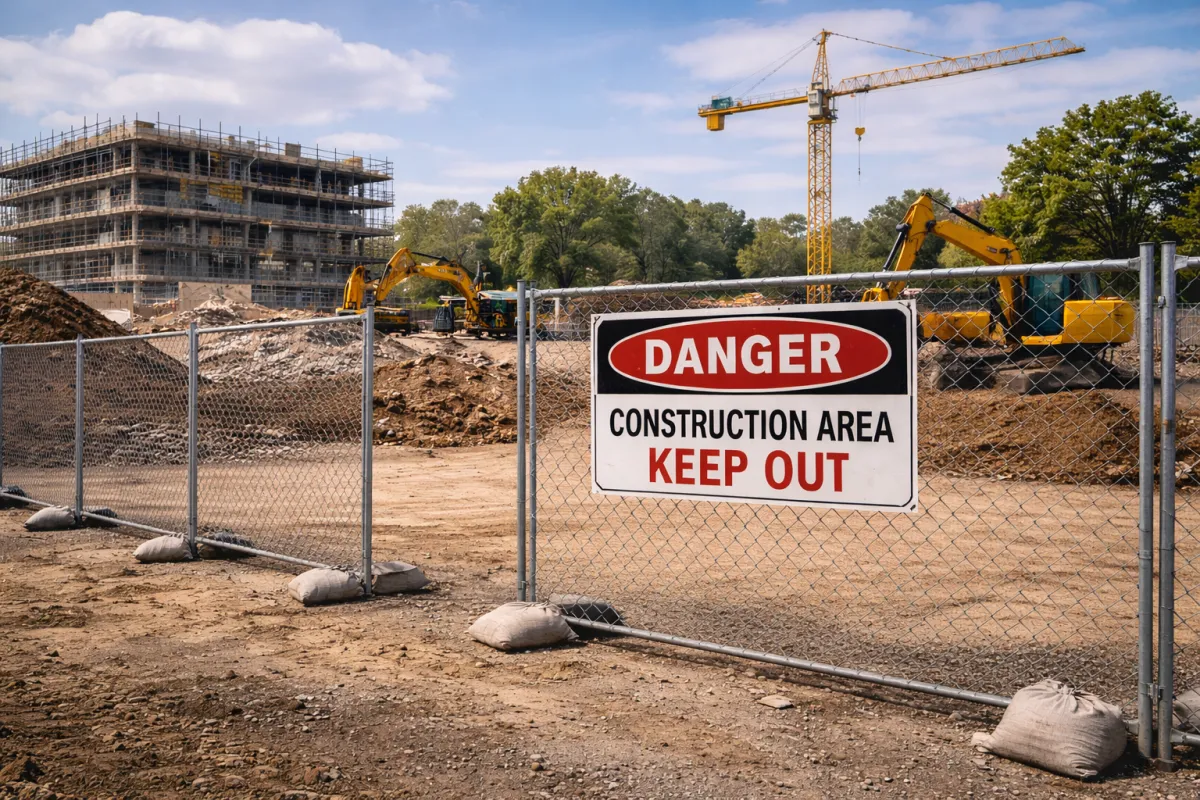
Why Temporary Construction Fencing Is Essential
Construction sites often contain valuable equipment, hazardous materials, and unfinished structures that can pose safety risks. Installing temporary fencing helps:
- Prevent unauthorized access
- Reduce theft and vandalism
- Improve worker and public safety
- Maintain compliance with local safety requirements
- Control entry and exit points for crews and deliveries
A properly secured job site minimizes liability while keeping projects running smoothly.
Types of Temporary Fencing Used on Construction Sites
Chain-Link Panel Fencing
Chain-link panels are the most common temporary fencing solution and are ideal for:
- Commercial construction sites
- Residential developments
- Long-term projects
- Perimeter security around equipment and materials
These panels can be quickly installed, repositioned, and expanded as the project grows.
Privacy Screen Fencing
Privacy screens can be added to standard fencing panels to:
- Reduce dust and debris spread
- Improve site appearance
- Limit visibility of valuable equipment
- Enhance safety around public-facing projects
This option is especially useful for projects located near busy roads or populated areas.
Barricade Fencing
Barricade fencing is often used for:
- Short-term construction work
- Roadwork and infrastructure projects
- Event-related construction setups
- Temporary hazard zones
It provides quick installation while maintaining clear safety boundaries.
Key Factors to Consider When Planning Temporary Fencing
Before scheduling fencing installation, contractors should evaluate:
- Total project perimeter size
- Gate placement for equipment and deliveries
- Local safety and municipal requirements
- Wind exposure and stabilization needs
- Project duration and relocation needs
Planning these details early ensures the fencing layout supports efficient daily operations.
Scheduling Fencing Before Project Mobilization
One of the most common job-site delays occurs when fencing installation is scheduled after crews arrive. Coordinating fencing delivery before project mobilization ensures:
- Immediate site security
- Organized staging areas
- Controlled access from day one
- Safer working conditions for crews
Early scheduling helps prevent operational interruptions during the initial phases of construction.
Final Thoughts
Temporary construction fencing plays a critical role in protecting job sites, maintaining safety compliance, and supporting efficient project operations. By planning perimeter security early and selecting the correct fencing type for each project, contractors can reduce risks while keeping projects on schedule.
View Direct Site Services info about Temporary Fencing
Website: https://directsiteservices.com